When designing a PLC control cabinet, electrical engineers need to follow the following principles:
- Functional principle
Meet control requirements:
Have a deep understanding of the process requirements and control process of the controlled object to ensure that the PLC control cabinet can realize all control functions. For example, on an industrial production line, it is necessary to accurately grasp the action sequence, logical relationship, and required sensors and actuators of each device.
Determine the model, input and output points, communication interface and other parameters of the PLC according to the control requirements to ensure the functional integrity of the system.
Reliability and stability:
Select electrical components with reliable quality and stable performance, such as PLC, relays, contactors, circuit breakers, etc. Components of well-known brands usually have better quality assurance and after-sales service.
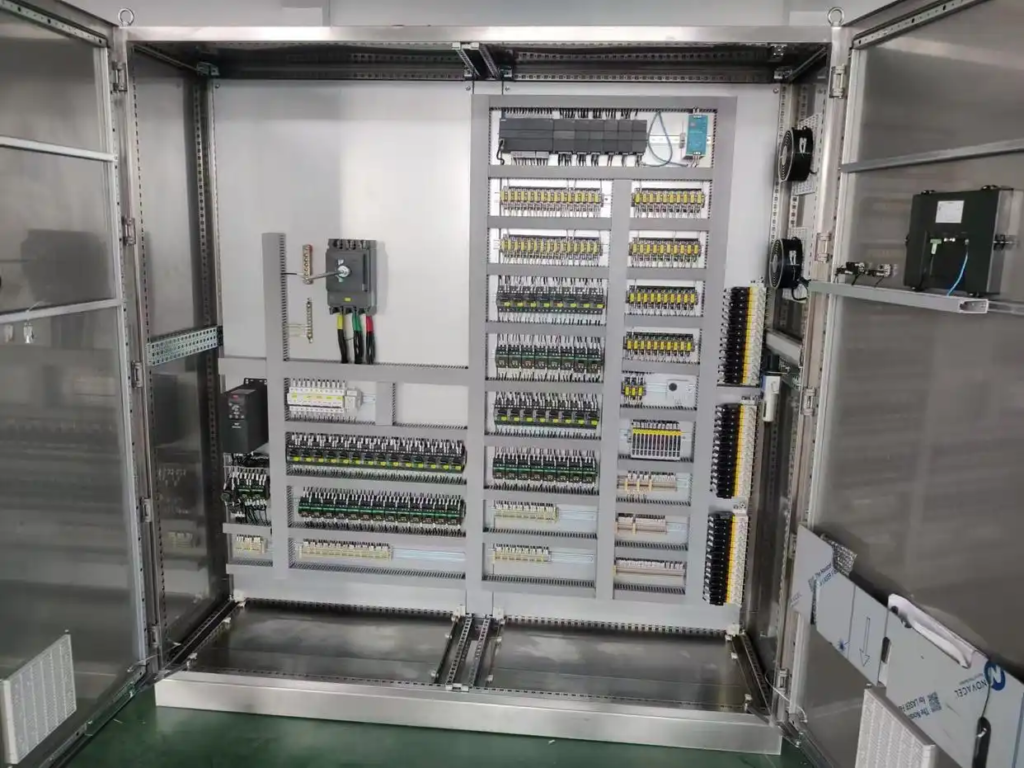
Reasonably design the layout and wiring of the control cabinet to avoid electromagnetic interference, signal crosstalk and other problems to ensure the stable operation of the system. For example, separate the wiring of strong and weak electricity, and use shielded cables and other measures.
Consider the redundant design of the system. For key equipment and links, redundant PLCs, power supplies, sensors, etc. can be used to improve the reliability of the system.
- Safety principle
Electrical safety:
Comply with electrical safety regulations to ensure that the control cabinet is well grounded to prevent electric shock accidents. The grounding resistance should meet the requirements of relevant standards and is generally not greater than 4 ohms.
Install appropriate leakage protection devices, short-circuit protection devices and overload protection devices to cut off the faulty circuit in time to protect the safety of personnel and equipment.
Isolate and warn the high-voltage parts to prevent operators from accidentally contacting them.
Mechanical safety:
The cabinet of the control cabinet should have sufficient strength and stability to withstand the weight of internal electrical components and external mechanical impact.
Reliable locking devices should be installed on cabinet doors and drawers to prevent accidental opening.
Consider ventilation and heat dissipation to avoid safety accidents such as fires caused by excessive temperatures.
- Maintainability principle
Easy to repair:
Design a reasonable control cabinet layout to make electrical components easy to install, disassemble and maintain. For example, install commonly used components in an easy-to-operate position and reserve enough space for repair.
Use standardized electrical components and connection methods for easy replacement and repair. For example, use terminals, plugs and sockets of uniform specifications.
Mark each electrical component with clear identification and numbering to facilitate troubleshooting and maintenance.
Fault diagnosis function:
Design fault diagnosis function in PLC program to detect and alarm faults in the system in time. For example, by monitoring input and output signals, equipment operating status, etc., determine whether there is a fault and display fault information on the human-machine interface.
Provide fault diagnosis tools and manuals to help maintenance personnel quickly locate and solve faults.
4. Economic principle
Cost control:
Select cost-effective electrical components and materials on the premise of meeting functional and performance requirements. You can choose the most suitable solution by comparing the prices and quality of products from different brands and suppliers.
Optimize the design of the control cabinet, reduce unnecessary components and functions, and reduce costs. For example, reasonably allocate input and output points to avoid waste.
Energy-saving design:
Consider the energy consumption of the system and select energy-saving electrical components, such as high-efficiency motors, energy-saving transformers, etc.
Optimize PLC program to improve the operating efficiency of the system and reduce energy consumption. For example, arrange the start and stop sequence of the equipment reasonably to avoid unnecessary idling.
5. Principle of aesthetics
Appearance design:
The appearance of the control cabinet should be neat and beautiful, meeting the requirements of industrial design. You can choose the appropriate cabinet color, material and surface treatment method to improve the overall image of the control cabinet.
The human-machine interface should be reasonably laid out, easy to operate, and clear and intuitive to display.
Wiring specifications:
The internal wiring should be neat and standardized to avoid clutter. Tools such as cable troughs and cable ties can be used for sorting to improve the aesthetics and reliability of the wiring.
The cable markings should be clear and accurate for easy maintenance and management.