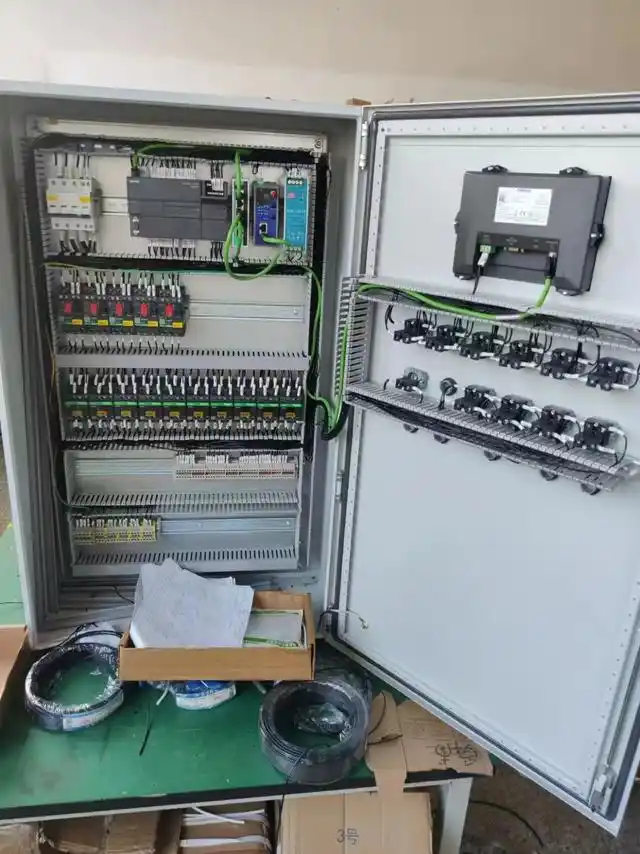
Correctly understanding and using the rated values and limits of the PLC control cabinet is essential to ensure the stable operation of the industrial automation system. Here are some methods and suggestions:
- Understanding the rated values
Rated voltage
Confirm that the voltage of the input power supply is consistent with the rated voltage of the PLC control cabinet. Before installation, carefully check the rated voltage information marked on the equipment nameplate.
If the power supply voltage fluctuates greatly, consider installing a voltage stabilizer to ensure that the input voltage is always within the rated range. For example, when the rated voltage is 220V, the fluctuation range should be controlled within ±10% as much as possible to avoid damage to the equipment.
Rated current
Select a suitable PLC control cabinet according to the current demand of the actual load. When designing the system, accurately calculate the total current of each load and ensure that it does not exceed the rated current of the control cabinet.
For possible instantaneous high current situations, such as when the motor starts, consider using equipment such as soft starters to reduce the impact of the starting current on the control cabinet.
Rated power
Determine the total power of all loads in the system and ensure that it does not exceed the rated power of the PLC control cabinet. If the power demand is large, you can consider using multiple control cabinets in parallel or choosing equipment with a higher power level.
Pay attention to the impact of power factor. Low power factor may cause the actual power consumption to exceed the rated power, which can be improved by installing a power factor correction device.
Protection level
Choose the appropriate protection level according to the characteristics of the installation environment. If the control cabinet will be installed in a humid, dusty or corrosive gas environment, a model with a higher protection level should be selected.
For control cabinets installed outdoors, special attention should be paid to waterproof, dustproof and UV-proof properties to ensure that the equipment can work normally in harsh environments.
- Understanding the limit values
Limit temperature
Understand the operating temperature range of the PLC control cabinet, which can usually be found in the equipment manual. During installation, ensure that the ambient temperature around the control cabinet does not exceed its limit temperature.
If the ambient temperature is high, ventilation and heat dissipation measures such as installing fans, air conditioners or using heat sinks can be taken to reduce the temperature inside the control cabinet.
For low temperature environments, pay attention to prevent condensation inside the equipment, and heating devices or insulation measures can be used.
Limit humidity
Determine the maximum relative humidity that the control cabinet can withstand. In high humidity environments, take moisture-proof measures such as installing dehumidifiers and using moisture-proof materials.
Avoid installing the control cabinet in places where water accumulation or water vapor condensation may occur, such as near water sources or wet ground.
Check the humidity inside the control cabinet regularly, and if necessary, use a humidity sensor for monitoring.
Limit vibration and shock
If there are large vibrations and shocks in the working environment, a PLC control cabinet with good vibration resistance should be selected. You can check the vibration and shock level indicators of the equipment to ensure that it can adapt to the actual environment.
During installation, take shock-absorbing measures, such as using shock-absorbing pads, fixing bolts, etc., to reduce the impact of vibration and shock on the equipment.
Regularly check the fixing of the control cabinet to ensure that the equipment will not loosen or be damaged due to vibration during operation.
3. Precautions in use
Strictly abide by the rated values and limit values of the equipment and do not use it beyond the specified range.
During the operation of the equipment, pay close attention to the changes in parameters such as temperature, humidity, and current. Once an abnormal situation is found, take timely measures to deal with it.
Regularly maintain and inspect the PLC control cabinet, including cleaning, tightening wiring, checking electrical components, etc., to ensure the performance and reliability of the equipment.
For important industrial automation systems, redundant designs such as backup power supplies and backup controllers can be considered to improve the reliability and stability of the system.
When upgrading or renovating equipment, re-evaluate the rated values and limit values of the system to ensure that the new equipment and components are compatible with the original system and work properly.
In short, correctly understanding and using the rated values and limit values of the PLC control cabinet is the key to ensuring the safe and stable operation of the industrial automation system. By rationally selecting equipment, optimizing the installation environment and strengthening maintenance management, the performance of the PLC control cabinet can be fully utilized and production efficiency and quality can be improved.