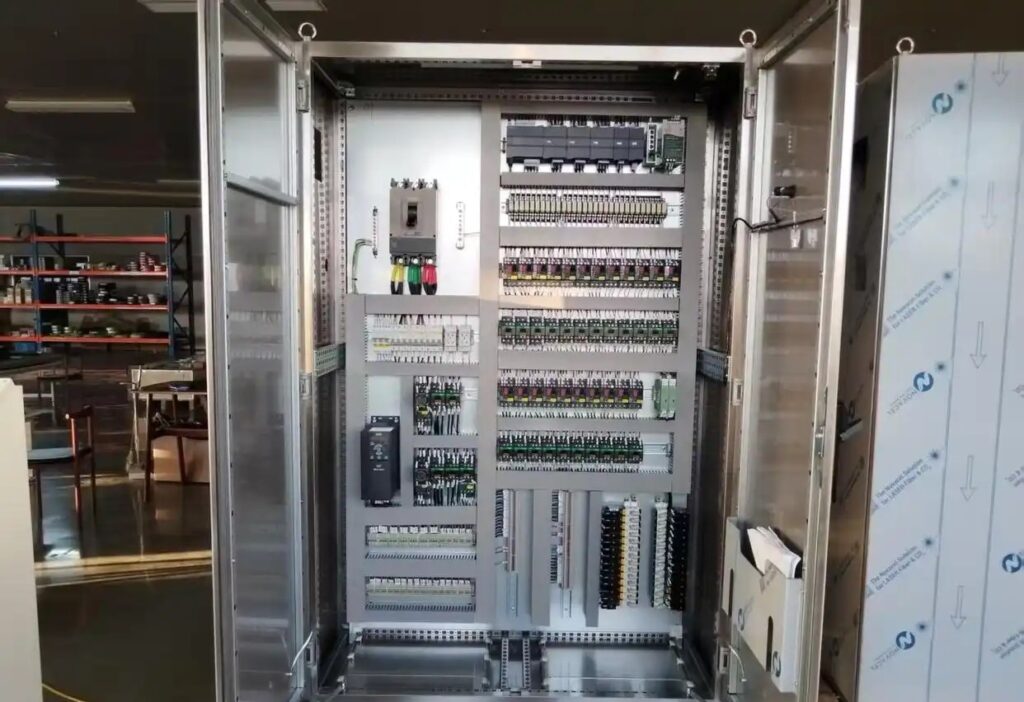
In addition to the number of I/O points, the following factors need to be considered when choosing a suitable PLC (Programmable Logic Controller):
Performance
Storage capacity: The storage capacity of a PLC includes program storage capacity and data storage capacity. The program storage capacity determines the size of the program that can be written, and the data storage capacity is used to store various data during operation, such as input and output data, intermediate variables, parameters, etc. If the program in the project is complex and the amount of data is large, you need to choose a PLC with a larger storage capacity.
Operation speed: measured by the time to execute a basic instruction, such as microseconds. For systems with high control requirements and fast response speed, such as high-speed production lines and real-time monitoring systems, PLCs are required to have faster operation speeds to ensure that various signals and instructions can be processed in a timely manner.
Instruction system: A rich and powerful instruction system can make programming more flexible and efficient. In addition to basic logical operations and arithmetic operations, some special function instructions, such as PID control instructions, motion control instructions, communication instructions, etc., are essential for realizing complex control tasks.
Function
Special function requirements: Depending on the specific control task, the PLC may be required to have specific functions. For example, in motion control, the PLC needs to have pulse output function and positioning control function; in process control, it needs to have analog control function and temperature control function.
Communication capability: If the PLC needs to communicate with other devices, such as data exchange with the host computer monitoring system, other PLCs, intelligent instruments, etc., it is necessary to consider its communication interface type and communication protocol. Common communication interfaces include RS232, RS485, Ethernet interface, etc., and communication protocols include Modbus, Profibus, OPC, etc.
Expansion capability: Consider whether the PLC has the ability to expand modules, as well as the types and number of expandable modules. When the number of I/O points or functional requirements of the system increase, it can be easily expanded.
Reliability
Working environment requirements: Different application scenarios have different requirements for the environmental adaptability of the PLC. For example, in an environment with high temperature, humidity, large dust or corrosive gas, it is necessary to select a PLC with a corresponding protection level that can adapt to harsh environments.
Reliability index: Check the PLC’s mean time between failures (MTBF), mean time to repair (MTTR) and other reliability indexes. The longer the MTBF and the shorter the MTTR, the higher the reliability and the better the stability of the PLC.
Redundancy function: For some systems with extremely high reliability requirements, such as power systems, aerospace, etc., the PLC may need to have redundant functions, such as power redundancy, CPU redundancy, communication redundancy, etc.
Other aspects
Programming language: PLC programming languages include ladder diagram, instruction table, function block diagram, sequential function diagram, etc. Different programmers have different familiarity and preferences for programming languages, so a PLC with a programming language that is easy for programmers to understand and master should be selected.
Brand and after-sales: PLCs of well-known brands are usually more guaranteed in terms of quality, performance, technical support, etc. At the same time, good after-sales service is also a very important factor, including technical training, maintenance services, spare parts supply, etc.
Cost factors: including the purchase cost of the PLC itself, the cost of expansion modules, the cost of programming software, the cost of installation and debugging, and the cost of later maintenance. On the premise of meeting the control requirements, cost factors should be comprehensively considered and a PLC with high cost performance should be selected.