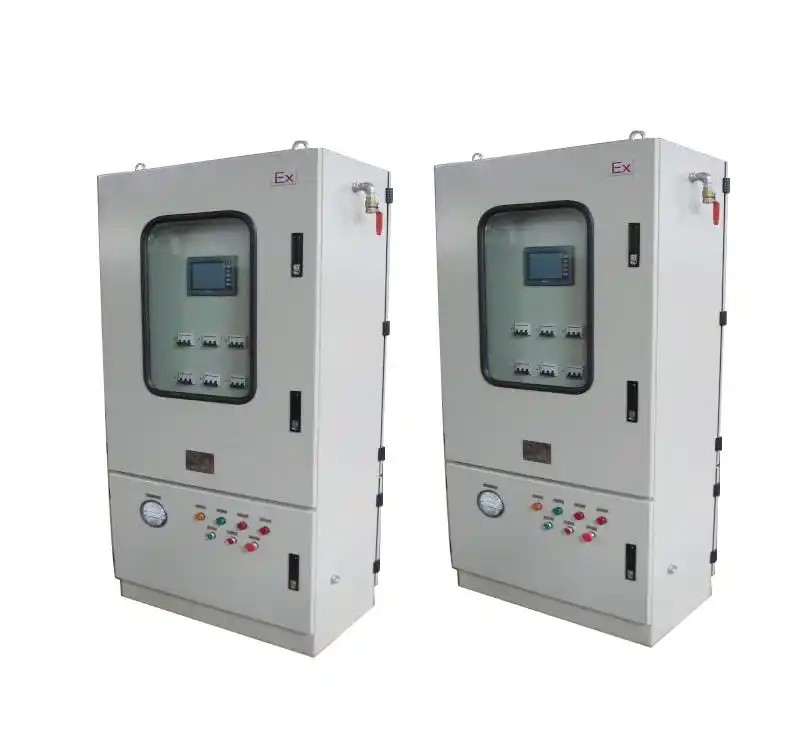
Explosion-proof control cabinets are mainly used in places with dangerous environments such as flammable and explosive gases, steam, and dust to ensure the safe operation of electrical equipment. The following are some industries that will use explosion-proof control cabinets:
Petrochemical industry
Crude oil extraction: At the oil well extraction site, there are a large number of flammable and explosive oil and gas. Explosion-proof control cabinets are used to control the operation of oil extraction equipment, such as pumping units and water injection pumps, to prevent explosions and fire accidents caused by electrical sparks.
Petroleum refining: In the distillation, catalytic cracking, and hydrofining processes of the refinery, various flammable and explosive gases and liquids will be produced. Explosion-proof control cabinets are used to control various pumps, compressors, mixers and other equipment to ensure production safety.
Chemical production: In the process of producing various chemicals, many raw materials, intermediates and products have flammable and explosive characteristics, such as ethylene, propylene, benzene, etc. Explosion-proof control cabinets are widely used in reactor control, material transportation control and other links in chemical production.
Coal Industry
Coal Mining: There are flammable and explosive gases and coal dust such as gas in the coal mine. Explosion-proof control cabinets are used to control coal mining machines, tunneling machines, scraper conveyors, ventilators and other equipment, which are important equipment to ensure safe production in coal mines.
Coal Washing: In the process of coal washing, flammable substances such as coal dust are also produced. Explosion-proof control cabinets are used to control washing equipment, such as crushers, screening machines, flotation machines, etc., to prevent dust explosion accidents.
Natural Gas Industry
Natural Gas Extraction: In places such as natural gas wellhead platforms and gas gathering stations, there is a high concentration of natural gas. Explosion-proof control cabinets are used to control natural gas extraction and gathering equipment, such as wellhead gas tree control and natural gas compressor control.
Natural Gas Transportation: In the booster stations and distribution stations of natural gas long-distance pipelines, explosion-proof control cabinets are used to control pipeline transportation equipment, such as gas compressors and valves, to ensure the safety of the natural gas transportation process.
Natural gas chemical industry: In the process of producing chemical products using natural gas as raw material, explosion-proof control cabinets are used to control various chemical equipment, such as synthetic ammonia units, methanol units, etc.
Pharmaceutical industry
API production: In the process of API synthesis and extraction, some flammable and explosive organic solvents, such as ethanol and acetone, are used. Explosion-proof control cabinets are used to control reactors, centrifuges, dryers and other equipment to prevent fire and explosion accidents.
Pharmaceutical preparation production: In the process of pharmaceutical preparation production, although the risk of flammability and explosion is relatively low, in some special links, such as using organic solvents for coating, granulation and other processes, explosion-proof control cabinets are also needed to ensure safety.
Paint and coating industry
Production link: In the production process of paint and coating, a large amount of organic solvents and flammable resins and other raw materials are used. Explosion-proof control cabinets are used to control mixing equipment, grinding equipment, filling equipment, etc. to prevent fire and explosion caused by electrical faults.
Storage and transportation: In the storage warehouses and transportation vehicles of paints and coatings, explosion-proof control cabinets are also needed to control ventilation equipment, monitoring equipment, etc. to ensure the safety of the storage and transportation process.
Grain processing industry
Grain storage: In grain warehouses, when grain dust reaches a certain concentration, it is easy to explode when encountering a fire source. Explosion-proof control cabinets are used to control the ventilation equipment and fumigation equipment in the warehouse to prevent dust explosions.
Grain processing: In the grain processing process, such as rice milling and flour milling, a large amount of grain dust will be generated. Explosion-proof control cabinets are used to control processing equipment, such as rice mills, flour mills, and conveying equipment to ensure production safety.
Shipbuilding and shipping industry
Shipbuilding: In the shipbuilding process, a large amount of flammable and explosive gases and coatings are used. Explosion-proof control cabinets are used to control welding equipment, painting equipment, ventilation equipment, etc. to prevent fire and explosion accidents.
Shipping: In the engine room, cargo hold and other areas of the ship, there are flammable and explosive substances such as fuel oil and oil gas. Explosion-proof control cabinets are used to control the ship’s power equipment, ventilation equipment, fire-fighting equipment, etc. to ensure the safety of the ship’s navigation.
Electronic semiconductor industry
Chip manufacturing: In the chip manufacturing process, some flammable and explosive gases, such as silane and phosphine, are used. Explosion-proof control cabinets are used to control gas delivery systems, etching equipment, coating equipment, etc. to ensure the safety of the production environment.
Electronic component production: In the production process of electronic components, such as capacitors and resistors, some flammable and explosive organic solvents and gases are also used. Explosion-proof control cabinets are used to control production equipment to prevent fire and explosion accidents.
In addition, in the fireworks and firecrackers manufacturing, winemaking, printing and dyeing, rubber processing and other industries, explosion-proof control cabinets are also needed due to the presence of flammable and explosive substances to ensure the safety and reliability of the production process.