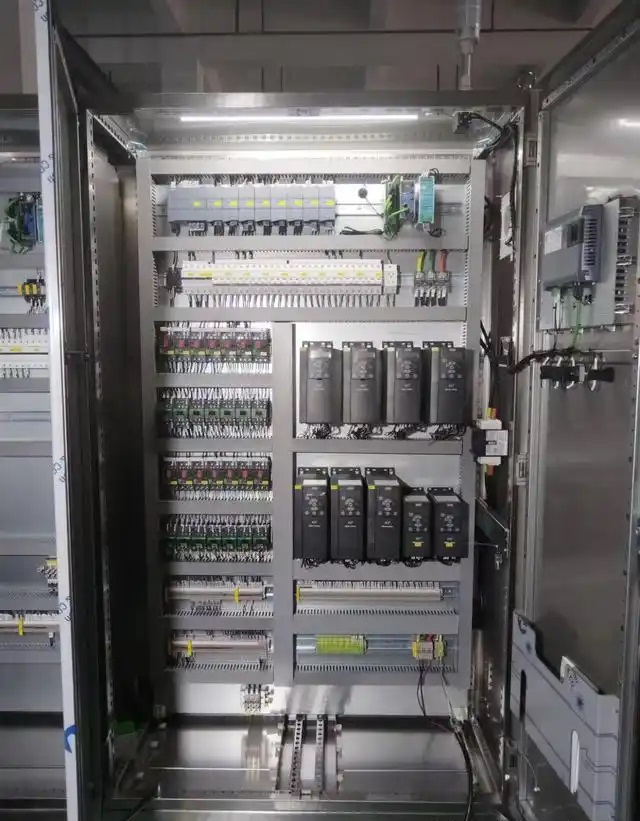
In the field of industrial automation, programmable logic controller (PLC) control cabinets play a vital role. As the core of the control system, they are responsible for performing various automation tasks, from simple switch control to complex process management. In order to meet the needs of different industries and application scenarios, customized PLC control cabinets have become a common solution. However, in order to ensure that the design, manufacture and installation of the control cabinet can accurately meet the actual needs of the customer, the customer needs to provide a series of key information when making a customized request.
I. Project Overview and Requirements
First, the customer needs to clarify the overall overview of the project, including the name, purpose, expected completion time and any specific industry standards or regulatory requirements of the project. This information helps the supplier understand the background of the project.
II. Working Environment and Conditions
- Installation Environment: Provide the installation location, environmental conditions (such as temperature, humidity, dustproof level, explosion-proof requirements, etc.) of the control cabinet, and space restrictions (size, weight limit, etc.). This information is crucial for the material selection, heat dissipation design, and protection level of the cabinet.
- Power supply conditions: Describe the power supply voltage, frequency, phase, and whether an uninterruptible power supply (UPS) or backup power system is required. Correct power supply configuration is the basis for ensuring stable operation of PLC.
III. Control system requirements
- I/O points and types: List the number and type of required inputs (such as buttons, sensor signals) and outputs (such as motor starters, indicator lights) in detail. This is the basis for PLC selection and control logic design.
- Communication requirements: Describe the communication protocol, rate and interface requirements between PLC and other devices (such as human-machine interface HMI, host computer, remote monitoring system).
- Control logic and program: Although PLC programming is usually completed by the supplier, the customer needs to provide a clear control flow chart, logic description or existing program (if any) so that the supplier can accurately understand the control requirements.
IV. Special functions and accessories
- Special function modules: such as analog input/output modules, high-speed counting modules, positioning modules, etc., determine whether these special functions are needed according to the control requirements.
- Human-machine interface: Select touch screen or button panel, as well as requirements such as interface layout and display content.
- Safety functions: including the design requirements of safety circuits such as emergency stop buttons, safety door locks, and safety relays to ensure that the system meets safety standards.
In summary, customizing a PLC control cabinet is a complex process involving many aspects, and the detailed information provided by the customer is the key to ensuring the success of the project. By fully and accurately conveying the above information, customers can work with suppliers to create an automation control system that meets actual needs and is cost-effective.