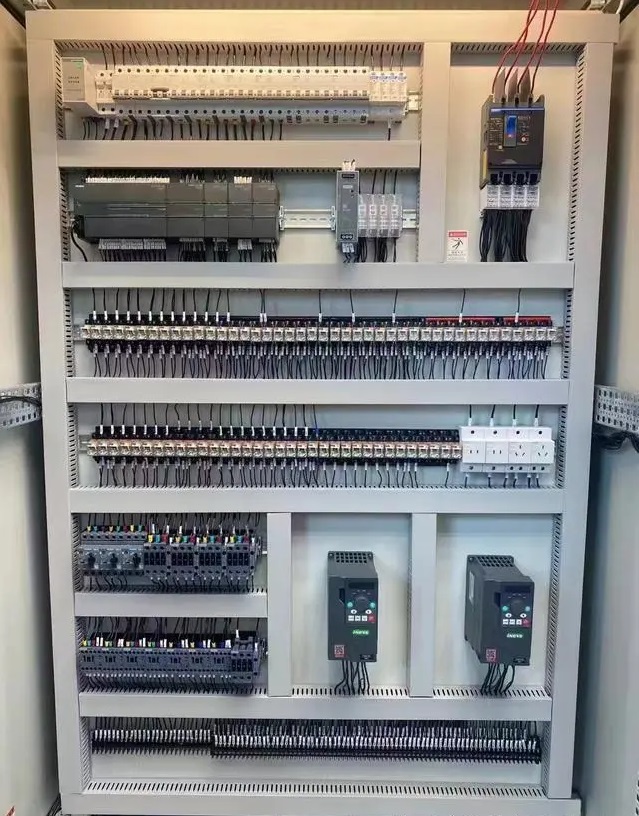
Precise control of the reaction process
Temperature control: Many chemical reactions in the reactor are extremely sensitive to temperature. The automated control system can monitor the temperature in real time through the temperature sensor installed in the reactor and compare it with the preset temperature value. Once the temperature deviates from the set range, the system automatically adjusts the power of the heating or cooling equipment. For example, in a polymerization reaction, too high a temperature may lead to a wide distribution of polymer molecular weight and a decrease in product quality; by precisely controlling the temperature within the range of ±1°C through automated control, it can ensure that the reaction proceeds according to the expected dynamics and improve the consistency of the product.
Pressure control: For reactions involving or producing gases, pressure control is essential. The automated control system can monitor the pressure changes in the reactor and maintain pressure stability by adjusting the inlet valve, exhaust valve, etc. For example, in a hydrogenation reaction, precise pressure control can ensure the full utilization of hydrogen while avoiding safety accidents caused by excessive pressure. It can control pressure fluctuations within a very small range to ensure that the reaction is carried out under safe and efficient conditions.
Stirring speed control: Stirring is to fully mix the reactants and ensure that the reaction proceeds evenly. The automated control system can control the speed of the stirring motor according to the stage of the reaction and the nature of the material. In the early stage of the reaction, when the concentration of the reactants is high, a higher stirring speed may be required; in the later stage of the reaction, as the reactants are consumed, the stirring speed can be appropriately reduced to save energy. By accurately controlling the stirring speed, the reactants in the reactor can be mixed more evenly and the reaction efficiency can be improved.
Improve production efficiency
Automated operation process: The reactor automation control system can automatically complete a series of operations such as feeding, reaction, and discharging according to the preset program. The operator only needs to set the parameters on the control panel, and the system can execute automatically, reducing the time and workload of manual operation. For example, when a certain chemical is mass-produced, the system can complete the precise measurement and addition of raw materials, the control of reaction conditions, and the unloading after the reaction is completed in sequence without human intervention, greatly shortening the time of each production cycle.
Optimize reaction time: By accurately controlling the reaction conditions, the automated control system can enable the reaction to achieve the expected conversion rate in the shortest time. It can monitor the progress of the reaction in real time, adjust the reaction conditions according to the reaction kinetics model, and ensure that the reaction is always carried out in the best state. For example, in some organic synthesis reactions, by optimizing conditions such as reaction temperature and pressure, the reaction time can be shortened from several hours of traditional manual control to less than a few hours, thereby improving the production capacity of the reactor.
Ensure production safety
Real-time monitoring and alarm: The automated control system is equipped with a variety of sensors that can monitor key parameters such as temperature, pressure, and liquid level of the reactor in real time. Once these parameters exceed the safety threshold, the system will immediately issue an audible and visual alarm signal and take corresponding safety measures, such as emergency feed cut-off, start the cooling system or vent system, etc. For example, in a highly dangerous reaction such as nitration, if the temperature is too high, the system will quickly start the emergency plan to prevent the reaction from getting out of control and causing an explosion.
Fault diagnosis and processing: The system has certain fault diagnosis functions and can identify problems such as equipment failure and sensor failure. When a fault occurs, it will try to automatically switch to backup equipment or take other emergency measures, and record fault information to facilitate maintenance personnel to quickly locate and solve the problem. This helps reduce production interruptions and safety accidents caused by equipment failure.
Ensure stable product quality
Standardized production process: The automated control system performs production operations according to fixed procedures and parameters, avoiding the uncertainty and errors that may be caused by manual operation. The conditions of each production process can be highly consistent, making the product quality more stable. For example, in the production of reactors in the pharmaceutical industry, strict control of reaction conditions can ensure that the composition, purity and other quality indicators of each batch of drugs meet strict standards.
Data recording and traceability: The system can record all parameters and operation records in the production process of the reactor, including the type and amount of raw materials, reaction conditions, production time, etc. These data can be stored for a long time, which is convenient for traceability and analysis when there are problems with product quality. Through the analysis of historical data, the production process can be further optimized to improve product quality.