Introduction
Servo motors are pivotal in industrial automation, offering precision in torque, speed, and position control. This blog explores how PLC engineers can master these control modes to optimize applications like robotics, CNC machines, and conveyor systems.
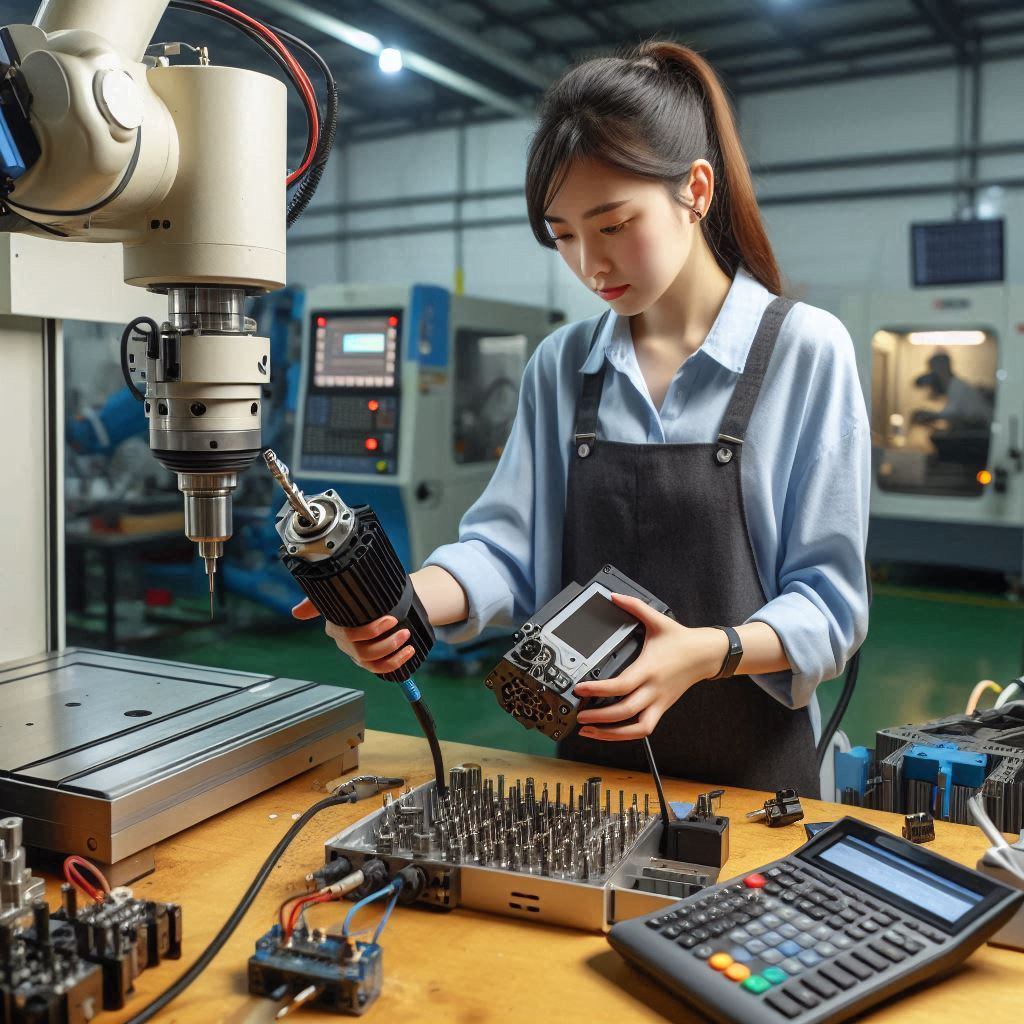
1. Understanding Servo Motor Control
- Components: Servo motor, drive, encoder (feedback device), and PLC.
- Closed-Loop System: Real-time feedback ensures accuracy, distinguishing servos from open-loop systems like stepper motors.
2. Torque Control
- Definition: Torque, the rotational force (Nm), is crucial for applications requiring force management.
- Applications: Winding machines, presses, and robotic arms (e.g., gripping without damage).
- PLC Implementation:
- Analog signals (0-10V) or digital protocols (EtherCAT) set torque limits.
- PID loops adjust motor current to maintain desired torque.
3. Speed Control
- Definition: Regulating motor RPM, vital for consistency under variable loads.
- Applications: Conveyors, mixers, and fans.
- PLC Implementation:
- PWM or analog outputs adjust speed.
- Encoder feedback enables PID tuning for rapid response to load changes.

4. Position Control
- Definition: Precise angular/linear positioning, measured via encoder pulses.
- Applications: CNC machines, pick-and-place robots.
- PLC Implementation:
- Pulse trains or motion control commands (e.g., MC_MoveAbsolute in IEC 61131-3).
- Homing sequences and cam profiles ensure repeatability.
5. PLC Integration Techniques
- Communication Protocols: Ethernet/IP, Modbus TCP, or PROFINET for seamless drive communication.
- Programming: Use ladder logic or structured text for motion control; leverage PLC motion modules for complex tasks.
- Safety: Implement STO (Safe Torque Off) and monitor fault signals.
6. Case Studies
- Packaging Machine: Position control via PLC-pulsed commands ensured accurate product placement, reducing waste by 20%.
- CNC Machine: Integrated torque (for cutting force) and position control achieved micron-level precision.
- Conveyor System: PID-adjusted speed control maintained throughput despite fluctuating loads.
7. Best Practices & Troubleshooting
- Tuning: Use Ziegler-Nichols for PID loops; validate with step-response tests.
- Maintenance: Regularly calibrate encoders and inspect mechanical couplings.
- Troubleshooting:
- Following Error: Check encoder alignment and PID gains.
- Noise Issues: Shield cables and ensure proper grounding.

Conclusion
Mastering servo control with PLCs enhances system performance and reliability. By understanding torque, speed, and position dynamics, engineers can tackle diverse automation challenges. Stay updated with trends like IoT integration, but solidify foundational skills for immediate impact.
Engage Further
Share your servo control experiences or questions below. For in-depth tutorials on PID tuning or motion profiles, explore our technical resources!