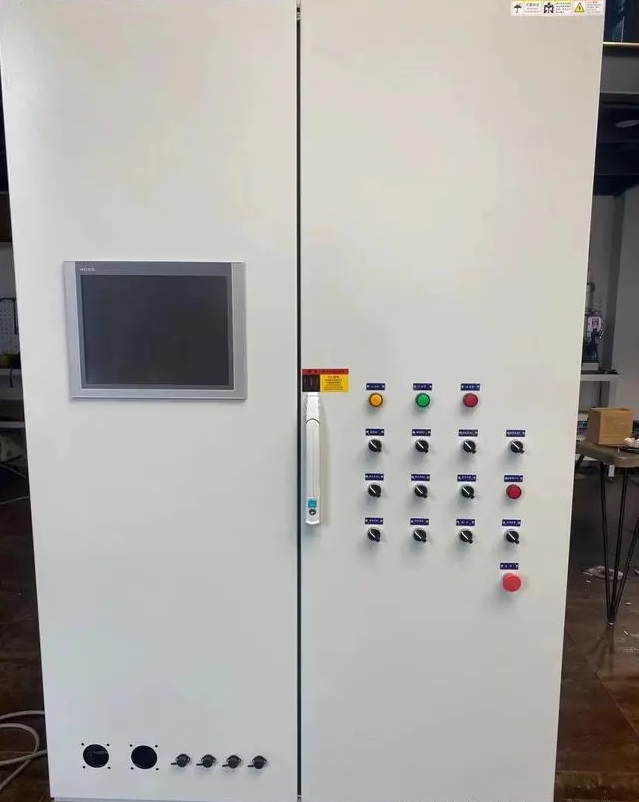
Hardware reliability
No mechanical contact problem: PLC uses microelectronic technology, and its internal logic operations and signal processing mainly rely on solid-state electronic components such as integrated circuits and transistors. Compared with traditional relay control systems, it has no mechanical contacts, and there are no problems such as wear, poor contact, and arcing caused by frequent actions of relay contacts. For example, in a control scenario where frequent signal switching is required, the contacts of the relay may have poor contact after thousands of actions, while the electronic components in the PLC are not affected by such mechanical wear and can work stably for a long time.
Anti-interference design: PLC has taken a variety of anti-interference measures in hardware design. For example, a photoelectric isolation circuit is usually set at the input and output interface to isolate the weak current signal inside the PLC from the external strong current signal, effectively preventing the influence of external electromagnetic interference (such as electromagnetic interference generated by motor starting, welding machine operation, etc.) on the internal circuit of the PLC. At the same time, the power supply part of the PLC will also use a filter circuit to filter the clutter in the power supply to ensure the stability of the power supply.
Redundant design (some high-end PLCs): For some application scenarios with extremely high reliability requirements, such as key control systems in industries such as chemical and electric power, some high-end PLCs will adopt redundant design. This includes CPU redundancy, power redundancy, communication redundancy, etc. Taking CPU redundancy as an example, the system will be equipped with two or more CPU modules. When working normally, one CPU is the main control and the other is the backup. When the main control CPU fails, the backup CPU can immediately take over the control task to ensure the continuous operation of the system.
Software reliability
Program stability: The PLC program is written in strict programming language and programming rules, and is stored in the PLC memory after compilation. During operation, the program is executed according to a fixed scan cycle and is not as susceptible to virus infection, software conflicts and other problems as computer software. For example, as long as the program follows the PLC programming specifications during the writing process and has been fully tested, it can run stably and repeatedly execute the same control logic without program crashes.
Fault self-diagnosis function: PLC has powerful fault self-diagnosis capabilities. It can monitor its own hardware and software status in real time, such as whether the CPU is working properly, whether there is an error in the memory, whether the input and output modules are faulty, etc. Once a fault is found, the PLC will remind the operator by flashing the indicator light and outputting the alarm information. At the same time, some PLCs can also store fault information in internal registers, which is convenient for maintenance personnel to view the fault history through the programming software and accurately locate the cause of the fault.
Adaptability to working environment
Wide temperature and humidity range: PLC can work normally in a wide temperature and humidity range. Generally speaking, industrial-grade PLCs can operate stably in a temperature range of 0-55℃ or even wider, and the relative humidity range can usually reach 5%-95% (no condensation). This good adaptability to environmental conditions allows PLCs to be installed in various industrial sites, such as high-temperature forging workshops, humid food processing workshops, etc., without frequent failures due to environmental factors.
Dustproof, shockproof and other characteristics: The shell design of PLC usually has certain dustproof and shockproof capabilities. Its sturdy shell structure can prevent dust from entering the internal circuit and avoid problems such as short circuits caused by dust accumulation. At the same time, PLC can also work normally in a certain degree of vibration environment (such as installed on the floor of a factory workshop where large equipment is running). The internal circuit boards and components can resist the impact of vibration through reasonable fixation and shock absorption design.