The emergency stop button can be directly connected to the input point of the PLC, or it can be connected to the PLC through a relay. Both connection methods have their own advantages and disadvantages, as follows:
- Direct connection to the PLC
Connection method
Connect the normally closed contact of the emergency stop button directly to the digital input point of the PLC. Generally speaking, one end of the emergency stop button is connected to the common end of the PLC input point (such as the negative pole of the 24V DC power supply or 0V), and the other end is connected to the input point of the PLC.
Advantages
Fast response speed: Since there is no delay of the intermediate relay, the emergency stop signal can be quickly transmitted to the PLC, allowing the PLC to respond quickly and stop the operation of the equipment.
Simple wiring: Reducing the intermediate relay and related wiring, reducing the risk of wiring errors, and also saving installation space and costs.
Disadvantages
Relatively low reliability: If the emergency stop button fails, such as contact adhesion, it may directly affect the input point of the PLC, causing the PLC to fail to work properly. Moreover, since there is no isolation measure, external interference signals may directly affect the input signal of the PLC, reducing the reliability of the system.
Insufficient protection for PLC input points: Pressing the emergency stop button may generate a large current shock, and long-term use may cause damage to the PLC input points.
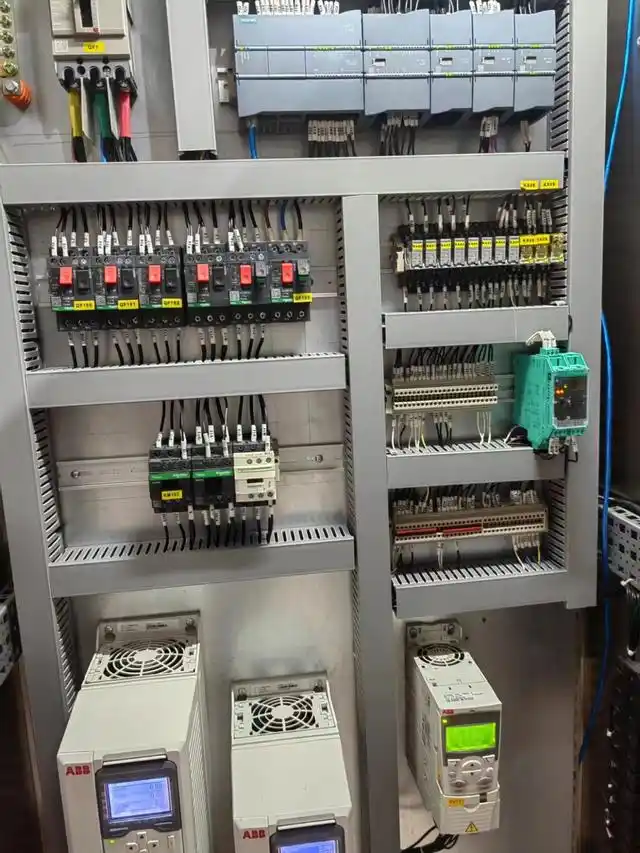
- Connect to PLC through relay
Connection method
Connect the normally closed contact of the emergency stop button to the coil of the relay, and the normally open contact of the relay to the digital input point of the PLC. When the emergency stop button is pressed, the relay coil loses power, the normally open contact of the relay is disconnected, and the emergency stop signal is transmitted to the PLC.
Advantages
Improve reliability: The relay can isolate and amplify the signal. Even if the emergency stop button fails, it will not directly affect the input point of the PLC. At the same time, the relay can withstand a large current shock and protect the input point of the PLC.
High flexibility: Different application requirements can be met by selecting different types of relays. For example, relays with multiple contacts can control the emergency stop function of multiple devices at the same time.
Disadvantages
Slightly slow response speed: Due to the increased action time of the relay, the response speed of the emergency stop signal is relatively slow.
Complex wiring: Additional relays and related wiring are required, which increases the installation cost and the risk of wiring errors.
- Selection suggestions
If the response speed is high and the system is not particularly strict on reliability, you can choose to directly connect the emergency stop button to the PLC. This connection method is suitable for small systems or occasions with high cost requirements.
If the system has high reliability requirements or needs to withstand large current shocks, you can choose to connect to the PLC through a relay. This connection method is suitable for large systems or occasions with high safety requirements.
Regardless of which connection method is used, you need to pay attention to the following points:
Ensure the reliability of the emergency stop button: Select an emergency stop button with reliable quality and perform regular inspections and maintenance.
Reasonable wiring: Avoid interference with the emergency stop signal and ensure the stability of signal transmission.
Perform correct programming: In the PLC program, correctly process the emergency stop signal to ensure that the equipment can stop running in time.