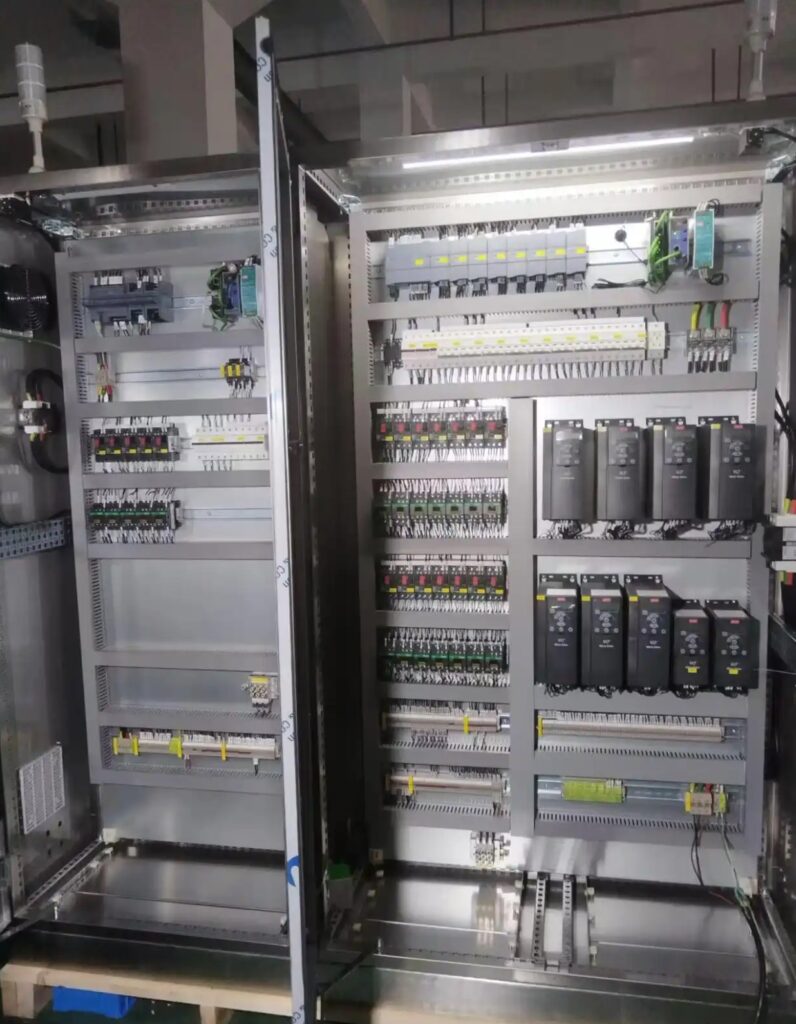
Compared with traditional control systems, automated complete control systems have significant advantages in integration, intelligence, reliability and other aspects. The following is a specific analysis:
High integration and integration
Multi-system integration: Automated complete control systems integrate multiple subsystems into one, such as integrating control, monitoring, data processing and other functions to achieve information sharing and collaborative work. However, the functional modules of traditional control systems are relatively independent, and there are obstacles to information interaction.
Compact design: Automated complete control systems use advanced hardware integration technology to make the equipment smaller and more compact, which can effectively save installation space and facilitate system installation and maintenance.
Intelligence and adaptive capabilities
Intelligent decision-making: With the help of advanced algorithms and models, automated complete control systems can deeply analyze and process the collected data to make intelligent decisions. For example, in industrial production, production parameters can be automatically adjusted according to product quality feedback. Traditional control systems can usually only be controlled according to preset fixed rules, lacking flexibility and intelligence.
Adaptive adjustment: Automated complete control systems can monitor the operating status of the system and changes in the external environment in real time, and automatically adjust control strategies and parameters to adapt to different working conditions and task requirements. Traditional control systems require manual adjustment of parameters to adapt to changes, with slow response speed and difficulty in achieving optimal control effects.
High precision and high reliability
Precise control: The automated control system uses advanced sensors and actuators, combined with high-precision control algorithms, to achieve precise control of the controlled object, and can improve the control accuracy to a higher level. Traditional control systems are limited by technology and equipment, and the control accuracy is relatively low.
Reliability design: Automated control systems usually use redundant design, fault self-diagnosis and fault-tolerant technology to improve the reliability and stability of the system. For example, key components use dual redundant configuration. When one component fails, the other can immediately take over the work to ensure uninterrupted operation of the system. Traditional control systems have relatively poor reliability when dealing with complex working conditions and sudden failures.
Efficient communication and interaction capabilities
High-speed communication network: The automated control system is equipped with a high-speed and stable communication network, which can achieve fast data transmission and exchange between subsystems and with the host computer, ensuring the real-time and coordination of the system. The communication speed of traditional control systems is slow, and the real-time and accuracy of data transmission are difficult to guarantee.
Friendly human-machine interaction: The automation control system is equipped with an advanced human-machine interface, which is more intuitive and convenient to operate. It can provide rich graphical displays, operation prompts and alarm information, etc., which reduces the difficulty and intensity of the operator’s work. The human-machine interface of the traditional control system is relatively simple, the operation is complex, and the professional requirements of the operator are high.
Easy to maintain and upgrade
Remote maintenance: The automation control system supports remote monitoring and maintenance functions. Technicians can remotely access the system through the network to perform fault diagnosis, parameter adjustment and software upgrades, which improves maintenance efficiency and reduces maintenance costs. Traditional control systems usually require maintenance personnel to go to the site for operation, and maintenance work is time-consuming and laborious.
Scalability and upgradeability: The automation control system adopts a modular and open architecture design with good scalability and upgradeability. Users can easily add or replace system modules and upgrade system functions according to actual needs. When upgrading and expanding traditional control systems, they are often restricted by hardware and software architecture, which is difficult and costly.