Introduction
In the evolution of industrial automation, factories have transitioned from traditional relay-based control systems to sophisticated Programmable Logic Controllers (PLCs). This shift is driven by the need for efficiency, adaptability, and integration in modern manufacturing. Let’s explore why PLCs have become the backbone of today’s smart factories.

1. Flexibility and Scalability
- PLCs:
- Software-Driven Logic: Control logic is programmed, not hardwired. Changes are made via software updates, enabling rapid adaptation to new processes.
- Reusable Code: Programs can be duplicated across machines, reducing setup time for similar tasks.
- Relays:
- Fixed Wiring: Modifying logic requires physical rewiring, which is labor-intensive and error-prone.
- Limited Scalability: Adding functions often means expanding relay panels, complicating design.
Example: An automotive assembly line switching from gas-powered to electric vehicle production can reprogram PLCs in hours, whereas relay systems would need weeks of rewiring.
2. Space and Complexity
- PLCs:
- Compact units replace entire relay cabinets, saving floor space.
- Simplified wiring with centralized I/O modules.
- Relays:
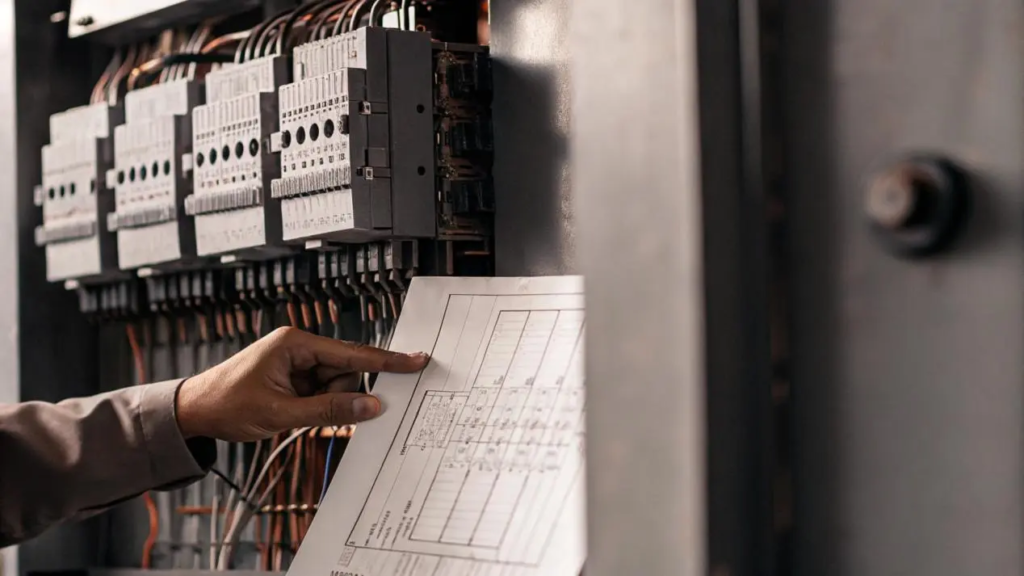
- Bulky panels with hundreds of relays and tangled wires.
- Higher risk of wiring errors and difficulty in troubleshooting.
Result: PLCs reduce clutter, lower installation costs, and streamline maintenance.
3. Reliability and Maintenance
- PLCs:
- Solid-State Design: No moving parts, minimizing wear and tear.
- Self-Diagnostics: Built-in error detection and logging pinpoint issues instantly.
- Relays:
- Mechanical Failure: Contacts degrade over time, leading to downtime.
- Manual Checks: Technicians must test each relay individually.
Impact: PLCs cut maintenance costs by 30–50% and boost uptime in industries like food processing, where continuous operation is critical.
4. Cost Efficiency Over Time
- Initial Cost: Relays may be cheaper for small, static systems.
- Long-Term Savings: PLCs reduce labor, energy, and downtime expenses. Their reprogrammability future-proofs investments.
Case Study: A textile mill saved 20% annually after switching to PLCs by eliminating relay replacement costs and reducing energy use.
5. Integration with Modern Technologies
PLCs seamlessly connect to HMIs, SCADA, and IoT platforms, enabling:
- Real-time data monitoring and analytics.
- Predictive maintenance via machine learning.
- Remote control and troubleshooting.
Industry 4.0: PLCs are pivotal in smart factories, where data-driven decisions optimize production. Relays lack such capabilities.
Addressing Misconceptions
- Complexity: While PLCs require programming skills, modern interfaces (e.g., ladder logic) are user-friendly.
- Overkill for Simple Tasks?: Even small factories benefit from PLC scalability as they grow.
Conclusion
Though relays still serve niche, low-complexity applications, PLCs dominate modern manufacturing due to their agility, compactness, and compatibility with digital transformation. As industries embrace automation and IoT, PLCs will remain indispensable in driving innovation and efficiency.