Choosing the right electrical components according to the control requirements requires comprehensive consideration of many factors. The following are specific methods:
Clearly define the control object and load characteristics:
Control object type:
If the control object is a motor, it is necessary to select electrical components based on the motor’s power, voltage, current, speed, starting method and other parameters. For example, for a three-phase asynchronous motor with low power, a direct starting method can be selected. At this time, a circuit breaker, contactor, thermal relay, etc. that meets the rated current of the motor needs to be equipped. For a motor with higher power, it may be necessary to use a starting method such as star-delta starting or soft starter, and the corresponding electrical component selection will also be different.
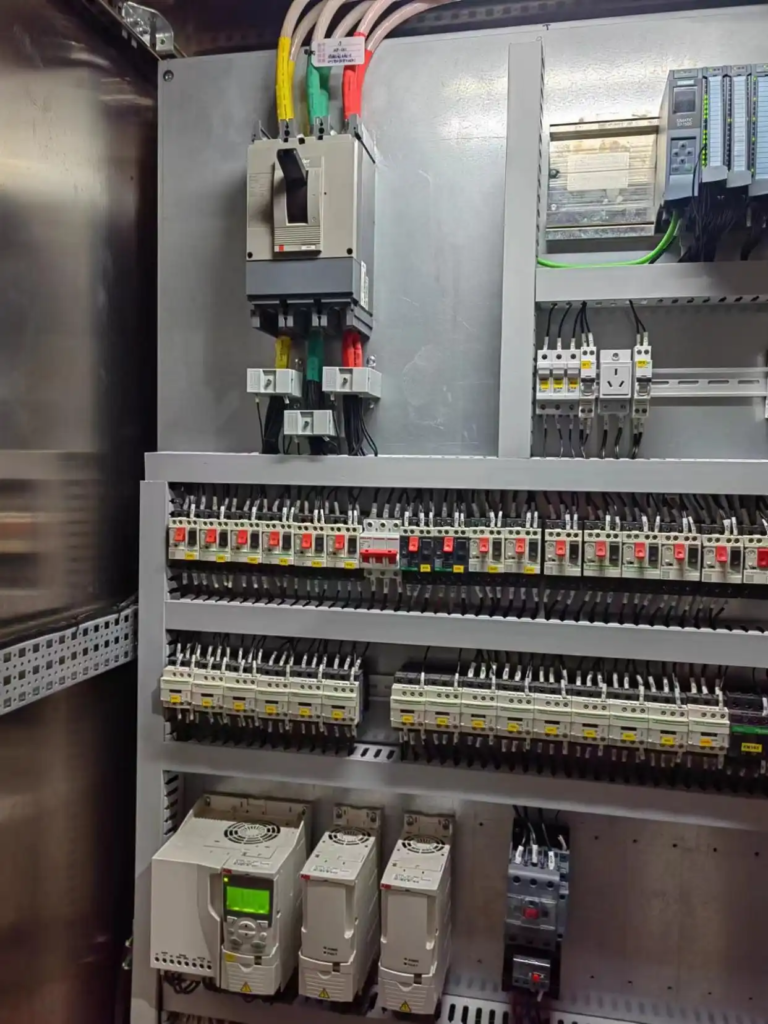
If you want to control the lighting circuit, you should choose according to the type of lighting fixtures (such as incandescent lamps, fluorescent lamps, LED lamps, etc.), power, quantity and lighting venue requirements. For example, ordinary indoor lighting can choose ordinary small circuit breakers and switches; for large lighting venues, contactors may be needed to achieve group control.
Load characteristics:
The load is a resistive load (such as a resistance furnace, electric heater, etc.), whose current is relatively stable and the starting current is small. When selecting electrical components, the main consideration is whether its rated current can meet the long-term operation requirements of the load.
Inductive loads (such as motors, transformers, etc.) will generate a large impact current when starting, so the rated current of components such as circuit breakers and contactors should have a proper margin, generally 1.5-2 times the rated current of the load.
Capacitive loads (such as capacitor banks, etc.) will generate a large charging current at the moment of input, and electrical components that can withstand this instantaneous current impact need to be selected.
Determine the working environment conditions:
Temperature: In a high temperature environment, the heat dissipation performance of electrical components will be affected, which may cause overheating or even damage to the components. Therefore, it is necessary to select high-temperature resistant electrical components, or take heat dissipation measures, such as installing a radiator. In a low-temperature environment, the performance of some electrical components may decline, such as the capacity of the battery. It is necessary to select components suitable for low-temperature environments or take insulation measures.
Humidity: If the working environment has high humidity, it is easy to cause the electrical components to be damp and corroded, affecting their normal operation. At this time, electrical components with good moisture-proof and waterproof properties should be selected, such as circuit breakers and contactors with high protection levels, and the control cabinet should be sealed and moisture-proof.
Dust and corrosive gases: In an environment with a lot of dust or corrosive gases, electrical components are easily contaminated and corroded, reducing their service life. In this case, it is necessary to select electrical components with dust-proof and anti-corrosion properties, or install the electrical control cabinet in a relatively clean environment, and take ventilation, filtering and other measures.
Analyze the requirements of the control circuit:
Control voltage and current: According to the voltage level of the control circuit (such as 220V, 380V, etc.) and the current to be controlled, select electrical components with appropriate rated voltage and current. For example, the coil voltage of the contactor should match the voltage of the control circuit, and the rated current of the circuit breaker should be greater than or equal to the maximum working current of the circuit.
Control mode:
If it is a simple on-off control, you can choose ordinary contactors, relays, etc.; if you need to implement timing control, you can choose time relays; if you need to implement counting functions, you can choose counters, etc.
For occasions that require remote control, you also need to choose electrical components with communication functions, such as PLCs and inverters that support communication protocols such as Modbus and Profibus, so as to communicate with the host computer or other devices.
Reliability and safety requirements: For some occasions with high requirements for reliability and safety, such as nuclear power plants, aerospace, etc., it is necessary to choose electrical components with reliable quality and strict certification. For example, choose circuit breakers and contactors with high reliability to ensure that the circuit can be cut off in time in the event of a fault to protect the safety of equipment and personnel.
Consider cost and maintenance factors:
Cost: Under the premise of meeting the control requirements, try to choose electrical components with high cost performance. You can choose the most suitable product by comparing the price, performance and quality of electrical components of different brands and models. However, we cannot simply pursue low cost while ignoring the quality and performance of components, otherwise it may lead to increased maintenance costs in the future.
Maintenance: Choose electrical components that are easy to maintain and replace, which can reduce the difficulty and cost of equipment maintenance. For example, choose contactors and relays with simple structures and easy disassembly and assembly; for some components that need to be replaced frequently, such as fuses and indicator lights, choose models that are easy to purchase and replace.