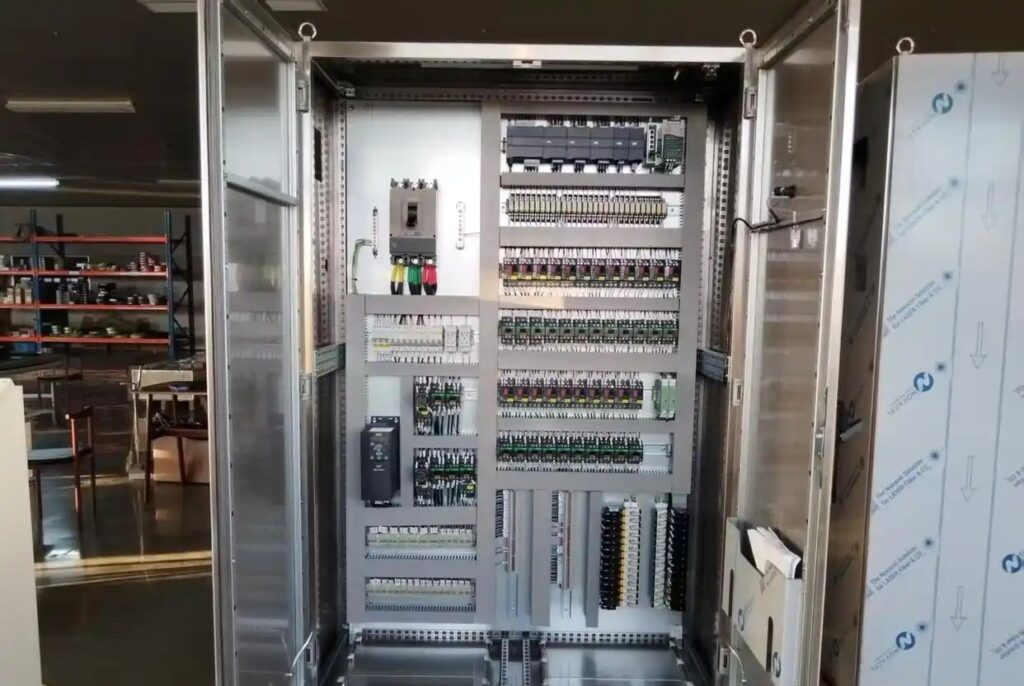
Industrial automation production cannot do without PLC (Programmable Logic Controller), which is mainly determined by the various characteristics and advantages of PLC:
High reliability
Hardware design: PLC has taken a series of anti-interference measures in the design and manufacturing process, such as using high-quality electronic components, special packaging and processing of circuit boards, etc., so that it can operate stably in harsh industrial environments, such as high temperature, humidity, dust, strong electromagnetic interference and other environments.
Redundant design: Some high-end PLCs also have redundant design. When a module fails, the system can automatically switch to the backup module to ensure the continuity of the production process and reduce downtime and losses caused by equipment failure.
Self-diagnosis function: PLC has a powerful self-diagnosis function, which can monitor its own working status and the operation of each module in real time. Once an abnormality is found, it can send an alarm signal in time and accurately point out the fault location, which is convenient for maintenance personnel to quickly troubleshoot and repair the fault.
Strong flexibility
Flexible programming: PLC uses programmable memory, and users can change its control logic through programming to adapt to different production processes and process requirements. When the production task changes, only the PLC program needs to be modified without large-scale hardware modification, which greatly shortens the development cycle and production cost of new products.
Flexible expansion: PLC has good scalability, and can easily add or reduce input and output modules, communication modules, etc. according to actual needs to meet the needs of industrial automation systems of different scales and complexities. Whether it is a small stand-alone automation equipment or a large production line and factory automation system, PLC can respond flexibly.
Rich functions
Logic control: PLC can realize various complex logic control functions, such as sequence control, conditional control, timing control, counting control, etc. Through the logical operation and judgment of the input signal, the corresponding control signal is output to realize the automatic control of various equipment in the industrial production process.
Data processing: With certain data processing capabilities, various collected data can be operated, compared, stored and transmitted. For example, sensor data such as temperature, pressure, flow, etc. are processed and analyzed to realize real-time monitoring and optimization control of the production process.
Communication function: Most PLCs support multiple communication protocols and can communicate and exchange data with other devices or systems, such as connecting with host computers, touch screens, sensors, actuators, etc., to achieve remote monitoring, remote control and network management.
Easy operation
Simple programming: PLC programming languages usually adopt ladder diagrams, instruction tables, function block diagrams, etc. These programming languages are intuitive, easy to understand and master, and even electrical engineers and technicians without professional programming knowledge can quickly get started.
Convenient debugging: During the debugging process, PLC can be monitored and debugged online through programming software, and the status of input and output signals and the operation of the program can be viewed in real time, which is convenient for modifying and optimizing the program and improving debugging efficiency.
High cost performance
Low cost: Compared with traditional relay control systems, PLC has a relatively low cost. Although the price of PLC itself may be high, due to its advantages of high reliability, strong flexibility, and rich functions, it can reduce a large amount of hardware equipment and wiring costs, while reducing the maintenance cost and failure rate of the system.
High return on investment: Using PLC for industrial automation production can improve production efficiency, product quality and production safety, reduce labor costs and energy consumption, thereby bringing significant economic and social benefits to the enterprise, and the return on investment is high.