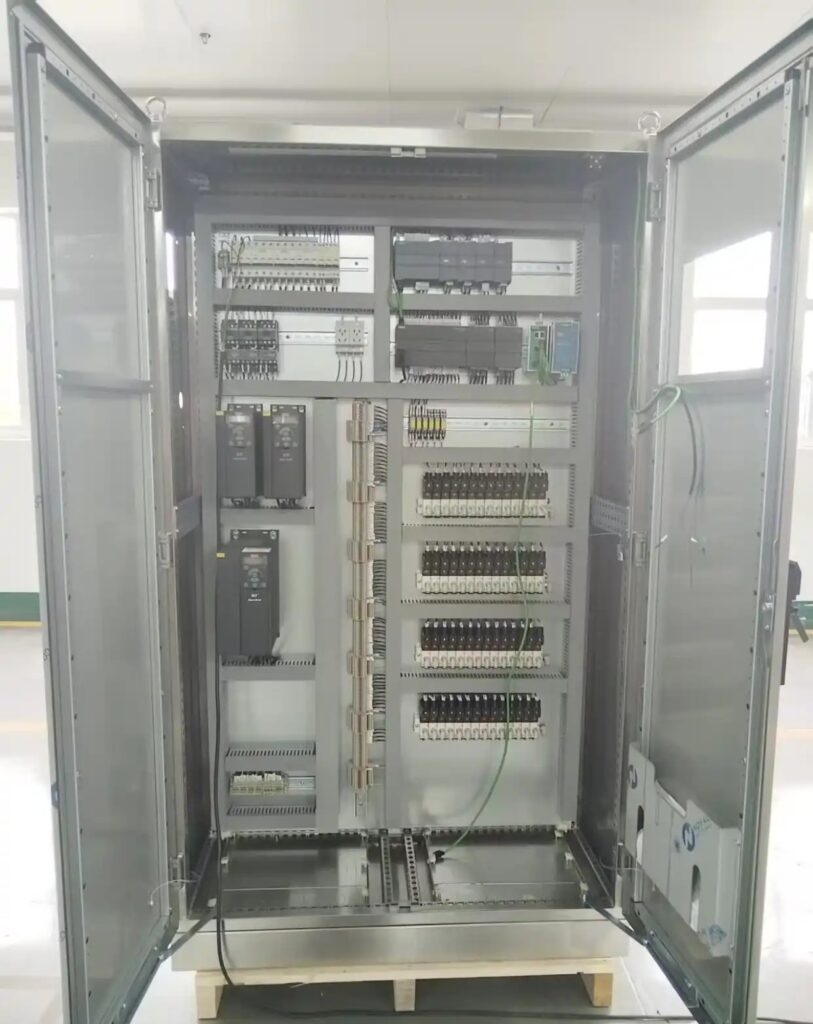
When electrical equipment fails, emergency treatment is crucial. The following introduces specific treatment methods from the aspects of emergency measures, fault judgment, repair and recovery:
Emergency measures
Immediately cut off the power: Once an electrical equipment failure is found, the first task is to quickly cut off the power supply of the equipment to prevent the failure from further expanding and avoid possible dangerous situations such as electric shock and fire. The power supply can be cut off by turning off the relevant circuit breakers, knife switches or unplugging the plug.
Evacuate personnel: If there are people gathering at the fault site, they should be evacuated immediately to ensure their safety and evacuate to a safe area to avoid accidents caused by electrical failures.
Set up warning signs: Set up obvious warning signs around the faulty equipment, such as “Equipment failure, please do not approach”, etc., to prevent unrelated personnel from accidentally touching or approaching the faulty equipment and causing safety accidents.
Fault judgment
Preliminary observation: Make a preliminary observation of the faulty equipment while ensuring safety. Check whether the equipment has obvious signs of damage, such as broken shell, smoke, fire, odor, etc.; check whether the connection lines are loose, short-circuited, burned, etc.; observe whether the indicator lights and display screens on the equipment have abnormal displays.
Ask and understand: Ask the on-site operator or relevant personnel about the specific situation when the equipment failure occurred, such as what operation the equipment was performing, whether there was any abnormal sound or vibration, and the operating status of the equipment before and after the failure, so as to obtain more information that helps to determine the fault.
Use tool detection: Use appropriate detection tools for further inspection according to the type of equipment and the fault situation. For example, use a multimeter to measure voltage, current, and resistance to determine whether the circuit is normal; use an insulation resistance tester to detect the insulation performance of the equipment; use an oscilloscope to observe the signal waveform, etc., and determine the specific location and cause of the fault through detection data.
Repair and recovery
Simple fault handling: For some simple faults, such as loose lines and poor contact of plugs, simple repair operations can be performed under the premise of ensuring safety. For example, re-tighten loose screws, plug in plugs, etc., but before operation, make sure that the power has been cut off and take corresponding safety measures.
Professional maintenance: If the fault is more complicated and cannot be handled by yourself, you should immediately contact professional electrical maintenance personnel or technical support personnel. While waiting for the arrival of maintenance personnel, do not disassemble or fiddle with the equipment at will to avoid causing more serious damage. At the same time, explain the fault situation and the preliminary inspection results to the maintenance personnel in detail so that they can carry out repairs quickly and accurately.
Resume operation: After the fault is repaired, do not rush to resume the operation of the equipment immediately, but conduct a comprehensive inspection and test of the equipment. First, check whether the various parameters of the equipment are normal, such as voltage, current, insulation resistance, etc.; then perform functional tests to ensure that the equipment can operate normally and all functions are restored to normal. After confirming that there are no problems with the equipment, the power supply and operation of the equipment can be gradually restored.
During the entire emergency handling process, you must remain calm, strictly abide by the safety operating procedures, and ensure the safety of personnel and equipment. At the same time, detailed records should be kept, including the time, phenomenon, and handling process of the fault, so as to facilitate subsequent analysis and summary to avoid similar faults from happening again.