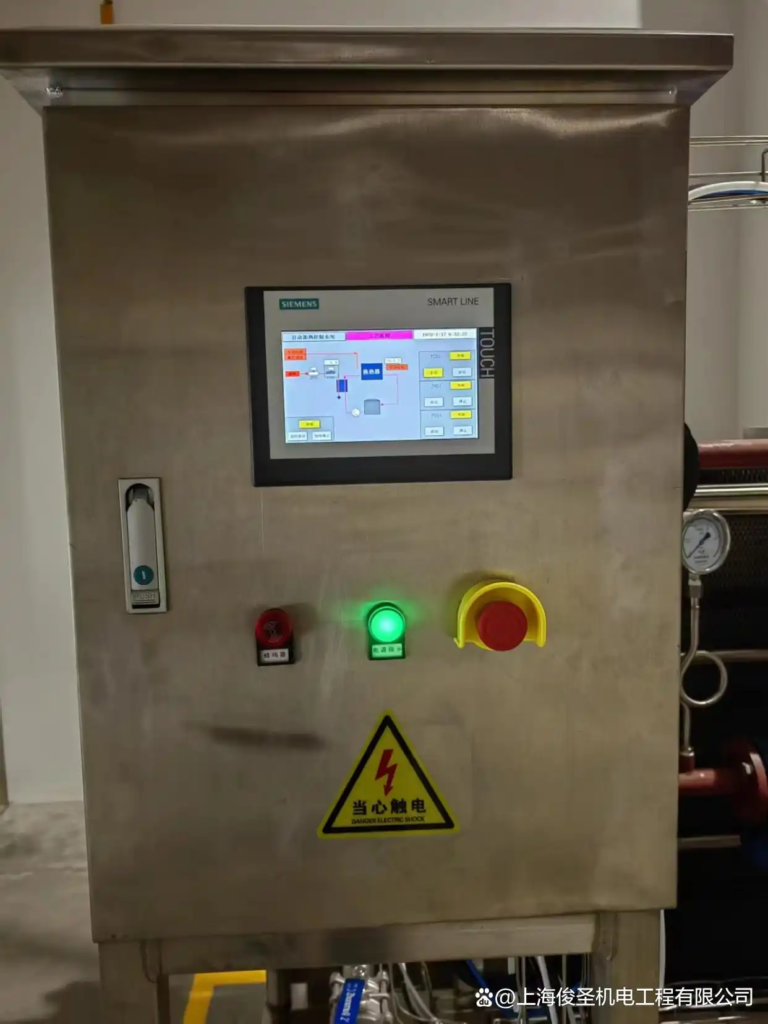
When performing secondary wiring work on the distribution cabinet, there are many things to pay attention to, covering safety, process and inspection. The following are the specific contents:
Safety
Power-off operation: Before performing wiring work, be sure to cut off the power supply of the distribution cabinet and ensure that the power switch is locked or hung to prevent accidental closing. At the same time, use a tester to test the power of each part in the distribution cabinet, and only operate after confirming that there is no voltage.
Personal protection: Workers should wear personal protective equipment that meets safety standards, such as insulating shoes, insulating gloves, safety helmets, etc., to avoid electric shock and other possible injuries.
Signs and warnings: Set up obvious warning signs around the distribution cabinet, such as “Stop, high voltage danger” and “Under maintenance, no closing”, etc., to prevent unrelated personnel from approaching. For dangerous points in the secondary circuit, such as high-voltage terminals and strong power areas, clear markings should also be made.
Preventing induced electricity: For some lines that may have induced electricity, such as long cable lines or secondary lines laid parallel to high-voltage lines, discharge treatment should be carried out before wiring to prevent induced electricity from causing harm to personnel and equipment.
Wiring process
Wire selection and laying
The appropriate wire model and specification should be selected according to the voltage level, current size, use environment and other factors of the secondary circuit. Generally speaking, 1.5mm² copper core insulated wires are commonly used in control circuits, and 2.5mm² and above wires are selected for current circuits according to the actual current size.
When laying wires, pay attention to neatness and beauty, and avoid crossing and confusion. The wires should be laid along the wire troughs or brackets of the distribution cabinet as much as possible, and fixed with cable ties or wire clips. The fixing spacing should be uniform, generally 200-300mm.
Terminal processing
Before wiring, the ends of the wires need to be processed. After removing the insulation layer, the core wires of the wires should be twisted to prevent looseness. For multi-strand soft wires, cold-pressed terminals or tin-plated treatment should be used to ensure reliable connection.
When connecting the wires to the terminal block, the number and wiring diagram of the terminal block should be followed to ensure that the wiring is correct. The number of wires connected to each terminal is generally no more than two. When connecting, ensure that the wires are in good contact with the terminals and tighten the screws to prevent false connections.
Wiring and bundling
The secondary wiring should be wired according to the schematic diagram and the installation wiring diagram, following the principle of from top to bottom and from left to right, so that the wiring levels are clear and easy to inspect and maintain.
For wires in the same direction, they should be bundled into bundles. The bundling should be firm and neat. The diameter of the wire bundle should be reasonably determined according to the number and thickness of the wires. Generally, it should not be too large or too small.
Inspection and testing
Wiring inspection: After the wiring is completed, check carefully whether each wire is connected correctly, whether there is any missing connection or wrong connection, whether the screws of the terminal are tightened, and whether the insulation of the wire is damaged.
Insulation test: Use an insulation resistance meter to test the insulation resistance of the secondary circuit, measure the insulation resistance between each circuit and between the circuit and the ground, and the value should meet the requirements of relevant standards, generally not less than 1MΩ.
Power-on test: After confirming that the wiring is correct and the insulation is good, the power-on test can be carried out. Before powering on, the equipment and wiring in the distribution cabinet should be checked again to ensure that there are no abnormalities. During the power-on test, the operation of the secondary equipment should be closely observed, such as whether the relay operates normally, whether the indicator light is on and off normally, and whether the instrument indication is accurate.