1.The rise and significance of digital factories
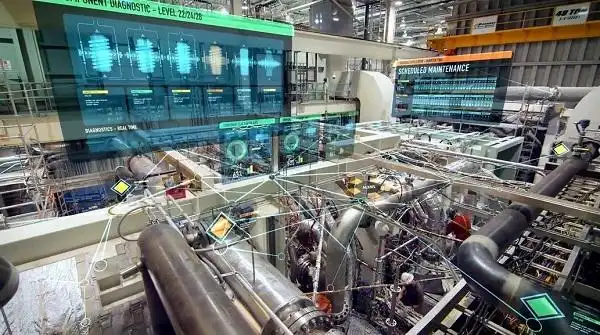
With the rapid development of science and technology, digital factories have gradually become an important strategic goal of many manufacturing companies. Digital factories are the product of the combination of modern digital manufacturing technology and computer simulation technology, which has injected new vitality into the basic manufacturing industry.
The rise of digital factories is not accidental. In recent years, with the rapid development of digital technology, enterprises are facing huge pressures such as time, cost, and quality. Against this background, digital factories have emerged and become an effective means for enterprises to meet challenges.
The significance of digital factories is great. First, it improves planning capabilities. Through the data collection and control functions of the MES system, the operation status and inventory status of each process can be understood in a timely manner, thereby improving production planning capabilities and ensuring that each process can be completed on time. Secondly, the process quality is improved. Through real-time collection and analysis of process flow, process time, operator data, etc., process defects can be discovered in a timely manner and improvement suggestions can be provided to improve product quality. In addition, inventory backlogs are reduced. Through the optimal material quality control and timely distribution management, the inventory management goals of material quality and low cost are achieved. Finally, the level of operation management is improved. Reasonable resource allocation to achieve optimal comprehensive efficiency/quality; form workshop production management reports, scientific data analysis to provide operational decision support, real-time perception of the enterprise’s operating status, timely and accurate acquisition of manufacturing process information, and provide decision-making basis for leaders.
Take Siemens Chengdu Digital Factory as an example. In 2011, Siemens built China’s largest digital factory in Chengdu. Through the iterative upgrade method of small steps and fast running and the support of various digital R&D tools, this factory currently has 13 production lines that can flexibly produce thousands of products, and the quality always maintains the “5 9” standard, and has achieved a double-digit annual decline in manufacturing costs for many consecutive years.
In short, the rise of digital factories has brought new opportunities and challenges to manufacturing companies. Its significance lies not only in improving production efficiency and product quality, but also in promoting the transformation and upgrading of the entire manufacturing industry.
- Construction plan of digital factories
(I) Information system planning and design
Information system planning and design is a key link in the construction of digital factories. When planning and designing, it is necessary to fully consider the actual needs and future development direction of the enterprise, clarify the goals, and rationally plan the hardware system and software system to avoid waste of resources. For example, Zhizaojia’s non-standard butler service provides a platform for non-standard buyers and suppliers to connect supply and demand, helping enterprises to significantly reduce procurement workload, reduce delivery risks, and improve the overall management level of non-standard outsourcing. By keeping abreast of every dynamic of the procurement project, importing the BOM table with one click, freely viewing and tracking the changes in the drawing version, and pushing the dynamics of the entire procurement process in real time, efficient management of procurement projects is achieved.
(II) Utilizing the ERP data platform
In the era of intelligent manufacturing, ERP plays a fundamental role. It integrates the core business processes of the enterprise, such as production planning, material management, sales and distribution, and provides a solid data foundation and management support for intelligent manufacturing. ERP is the only choice for business and financial integration and standard cost accounting. It can grasp the production progress, inventory status and market demand in real time, provide accurate data support for intelligent manufacturing, and help achieve precise production. For example, the Shufu ERP system takes enterprise management as its core, uses information science and technology to automate management, supply chain, production, sales and other activities, and establishes a management system that realizes the integrated upstream and downstream processes of enterprises, helping enterprises to simplify, realize information management, promote industrial upgrading, reduce costs, and win more business opportunities and profits.
(III) Choose a professional MES system
Different industries have different characteristics, so it is necessary to choose a professional MES system. The MES industry has obvious characteristics and diverse suppliers. When choosing an MES system, manufacturing companies need to consider comprehensive basic functions, advanced technical architecture, strong applicability, and simple and convenient operation. For example, Luofu Cloud Computing’s MES manufacturing execution system can centrally monitor the entire production process from material production to finished product storage, collect all events that occur during the production process, and control material consumption, equipment monitoring, and product testing. Through different project dashboards, it is presented to enterprise managers and front-line operators in real time, making the entire workshop site completely transparent. At the same time, the application of MES system in the processing workshop can realize the storage management and authority management of CNC processing programs, the effective management and full utilization of manufacturing resources and process resources such as tool library, tooling library, process regulations, machine tools and equipment, and the comprehensive management and decision support of workshop production information.
(IV) Launch APS and select suitable suppliers
After ERP and MES are launched, for highly complex business scenarios, APS (Advanced Scheduling System) is needed to realize key functions such as process work order optimization. For example, Luofu Cloud Computing provides an overall MES solution, in which APS fully automated fast scheduling reduces the workload of personnel in making plans and eliminates errors and mistakes in manual scheduling. Through the application of APS, it is possible to better cope with complex production environments, improve production efficiency, and optimize resource allocation. It is also crucial to select a suitable APS supplier, and factors such as the supplier’s experience and level, the stability and reliability of the system, and the ability to integrate with other systems need to be considered.
- Architecture and core elements of digital factories
(I) Architecture dimension
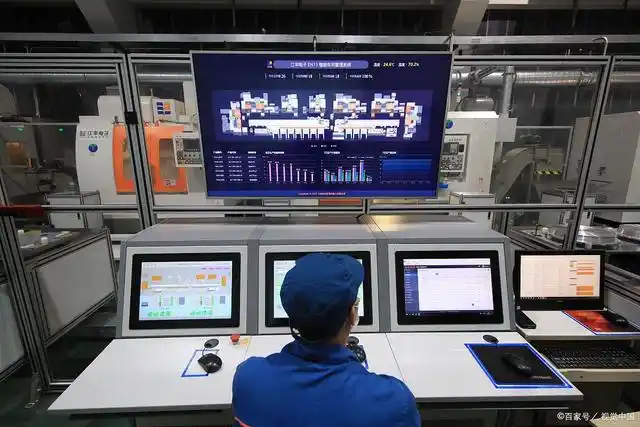
The two-dimensional system architecture of digital factories is constructed from the two dimensions of product life cycle and system level, covering the equipment resources and control layer, database layer, management layer and collaboration layer.
The equipment resources and control layer is the technical basis for enterprises to carry out production activities, including hardware equipment such as sensors, instruments, barcodes, radio frequency identification, and control systems such as programmable logic controllers (PLCs) and data acquisition and monitoring control systems (SCADA). For example, in automobile manufacturing companies, these devices can monitor the operating status of production lines in real time to ensure efficient production.
The database layer provides the most basic data support for digital factories, including various databases such as design, process, manufacturing, and management. Taking electronic product manufacturing companies as an example, the design database stores the three-dimensional model and circuit schematics of the product, and the process database contains the production process and parameters, providing accurate guidance for production and manufacturing.
The management layer includes management systems for different departments, such as product data management (PDM) and manufacturing execution system (MES). In mechanical processing enterprises, MES systems can monitor and schedule the production process in real time to improve production efficiency and quality.
The collaboration layer realizes collaboration between departments within the enterprise and between different enterprises in the industrial chain through the Internet, including product lifecycle management (PLM), enterprise resource planning system (ERP), etc. For example, in the clothing manufacturing industry, the PLM system can realize full-process collaboration from design, production to sales, and improve the market response speed of the enterprise.
(II) Core functional elements
Interconnection
The core of the digital factory is connection, which realizes the close connection between equipment, production lines, factories, suppliers, products and customers. The interconnection between production equipment can form production lines, digital workshops and digital factories, and even digital factories in different regions, industries and enterprises can form a digital manufacturing system alliance. According to statistics, the digital manufacturing system alliance formed by equipment interconnection can increase the production capacity of enterprises by more than 15%.
The interconnection between equipment and products enables operators to understand the processing stage and manufacturing time of products at any time. For example, in electronic manufacturing enterprises, through the Internet of Things technology, products and production equipment can communicate, and operators can grasp the production progress of products in real time through terminal devices.
The interconnection between virtual and real connects physical devices to the Internet through information technology, allowing physical devices to have functions such as computing, communication, control, and remote collaboration, realizing the integration of the virtual network world and the real physical world.
System integration
The digital factory forms a network of physical devices through information technology to realize the interconnection between people, people and equipment, equipment and equipment, and services and services. Horizontal integration enables resource sharing between enterprises, such as interconnection of production line equipment between different factories; vertical integration solves the integration problem of internal information flow of enterprises, laying the foundation for big data analysis and advanced intelligent decision-making; end-to-end integration of the value chain creates a value chain around the entire life cycle of the product, and realizes the whole process management from product design to after-sales service.
4.Data information fusion
On the basis of system integration and communication, the new generation of information technologies such as cloud computing and big data are used to realize the collaborative sharing of data information. Product data information makes it possible to manage the entire life cycle of products, operational data information is used to manage and optimize equipment and supply chains, and industrial chain data information provides enterprise managers with information to view the value chain, which is transformed into a strategic advantage for the enterprise. For example, a manufacturing enterprise has realized personalized services and improved customer satisfaction through the analysis of product data information
(I) Improve the digitalization of various business and production links
First, use corresponding specialized industrial software in each link of the value chain with EPR as the main line and each link of the product chain with PLM as the main line. For example, in the automotive manufacturing industry, the use of advanced CAD/CAE software in product development can improve the accuracy and efficiency of product design; in the production process, the MES system is used to monitor and manage the production process in real time to ensure product quality and production progress. At the same time, MES is implemented in the production environment at the intersection of the two chains to achieve comprehensive control of the production site. These are basic digital implementations, laying a solid foundation for subsequent construction steps.
(II) Software interconnection
Interconnect specialized industrial software in each link, break information silos, and gradually realize the automation of processes on the value chain and product chain. Taking electronic manufacturing companies as an example, by integrating systems such as CAD, CAM, PLM and MES, data sharing and collaborative work in product design, process planning, production and manufacturing can be achieved. In the product chain, the functional links of the product life cycle are integrated, the digital main line is established, and data is integrated for the establishment of a digital model of the product – the digital twin. This can improve production efficiency, reduce production costs, and provide more accurate data support for corporate decision-making.
(III) Macro-optimization of production processes and business processes
In this process, connection and data collection are the foundation. By installing sensors and other equipment, various data in the production process, such as temperature, pressure, flow, etc., are collected in real time. Then, the data is analyzed through models to gain insights into the production process. For example, big data analysis technology is used to mine and analyze data in the production process to find out the key factors affecting product quality and production efficiency. Then, through specialized industrial applications, insights are converted into optimal decisions based on production rules and business goals, and they are accurately executed. Finally, closed-loop feedback is used to optimize the allocation of production resources and improve the core competitiveness of enterprises.
(IV) Interconnection and collaboration of information systems between enterprises
Open up the interconnection of information systems between enterprises in the ecosystem to achieve business and production collaboration between enterprises. Expand the scope of optimization to the ecosystem and the client, connect the products deployed by customers, and achieve service extension through the management of the entire life cycle of products, opening up opportunities for business transformation of enterprises. For example, in supply chain management, information sharing and collaboration between suppliers, manufacturers and customers are achieved through digital platforms to improve the efficiency and reliability of the supply chain. At the same time, by managing the entire life cycle of customer products, we provide personalized services to enhance customer satisfaction and loyalty.
5. Advantages of digital factories
(I) Flexibility and efficiency
Digital factories have made the production process flexible, greatly shortening the planning time and production line wiring cycle. In terms of collaborative work among departments, digital factory technology has broken the situation where each department in the traditional factory is independent of each other, making each department closely connected to form an organic whole. For example, in the automobile manufacturing process, the design department, production department, logistics department, etc. can realize information sharing and collaborative work through the digital platform, and can pre-plan the factory layout, product production level and capacity at the beginning of the design, evaluate and test the feasibility of various plans in advance, so as to flexibly allocate resources and coordinate various problems during the construction process. This pre-planning function not only helps to improve production efficiency, but also enhances the factory’s ability to respond to market changes. In addition, digital factory technology can also improve the efficiency of the manufacturing cycle. Through real-time monitoring and data analysis of the production process, it is possible to timely discover and solve bottleneck problems in production, optimize production processes, reduce the risk of production interruptions, and thus achieve efficient production operations.
(II) Quality improvement
Digital factories have significant advantages in ensuring product quality. By strictly controlling and coordinating product design, raw materials, production and other links, the uncertainty between design and manufacturing is reduced. For example, by using digital modeling technology and virtual reality technology, the performance of the product can be simulated and optimized during the product design stage, and potential quality problems can be discovered and improved in advance. At the same time, digital factories can also reduce production costs and avoid production risks. Through real-time monitoring and data analysis of the production process, abnormal situations in production can be discovered in time, and corresponding measures can be taken to deal with them to avoid the expansion of quality problems. For example, in the manufacturing of electronic products, through real-time monitoring and analysis of production equipment operation data, the occurrence of equipment failures can be predicted, and maintenance and maintenance can be carried out in advance, thereby ensuring the continuity of production and the stability of product quality.
(III) Resource Conservation
Digital factories can save resources, reduce costs, and improve capital efficiency. Through virtual design and verification, the production and modification of physical prototypes are minimized to the greatest extent, effectively reducing resource waste. For example, in the field of aerospace, the use of digital factory technology can design and test aircraft parts in a virtual environment, avoiding a large amount of material waste and time costs in the traditional manufacturing process. At the same time, making full use of existing data for production simulation and prediction, and making pre-judgments and decisions on the production process can improve production revenue and capital utilization efficiency. For example, by analyzing data such as market demand, production materials, and equipment status, production plans can be optimized, resources can be arranged reasonably, and inventory costs and production costs can be reduced.
(IV) Enhanced competitiveness
Digital factories can shorten product launch time and enhance product competitiveness. By quickly conducting virtual simulation design and optimizing production processes, the progress of new product design and formation can be accelerated, and the smoothness of the new product production process and the reliability of product quality can be ensured. For example, in the fashion apparel industry, the use of digital factory technology can quickly respond to changes in market trends, design new clothing that meets consumer needs, and quickly bring them to market through efficient production processes. In addition, digital factories can also enhance the competitiveness of enterprises in the market by improving product quality, reducing production costs, and improving production efficiency, and win more market share and customer trust for enterprises.